Hot Dog Hot Owner: A Designer's Take on This Playful Graphics Set
When I first opened the Hot Dog Hot Owner graphics set, I admit I smiled. There is something instantly disarming about a design that leans into humor without trying too hard. The name alone sets a tone: playful, a little cheeky, and clearly built for someone who enjoys a lighthearted take on everyday life. As someone who spends hours evaluating design assets for real embroidery projects, I have learned to spot the difference between a graphic that looks clever on screen and one that actually holds up after stitching, washing, and repeated handling. Hot Dog Hot Owner falls into the latter category, but only if you match it to the right project and prepare it properly.
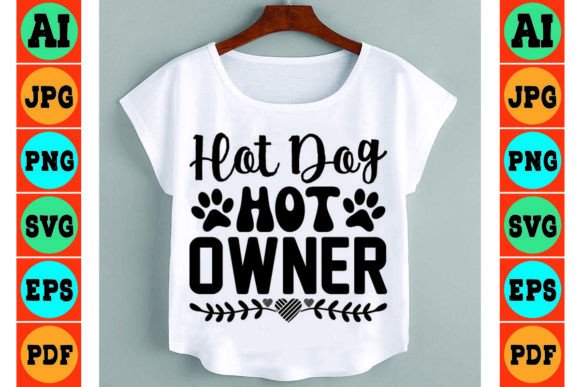
This design comes as a set of high-quality vector and raster graphics. You receive an AI file, an EPS, a PNG with a transparent background, an SVG, and a PDF. That range of formats tells me immediately that this asset was built for flexibility. Whether you are creating a print-ready mockup for your Etsy shop, sending a file to a digitizing service, or cutting a heat transfer vinyl application, you have the right format at hand. The design is fully scalable, and because it is vector-based, you can change the colors without losing any crispness. That matters more than most beginners realize. If you have ever tried to recolor a low-resolution PNG and ended up with jagged edges and muddy tones, you will appreciate what these vector formats offer.
From a visual standpoint, Hot Dog Hot Owner carries a cartoon energy that feels friendly and accessible. The linework is clean without being stiff. The proportions lean toward the exaggerated side, which works well for apparel and accessories where you want the graphic to read clearly from a few feet away. The theme revolves around a hot dog and its owner, which opens up a range of applications: custom pet merchandise, humorous gifts for food lovers, boutique dog-walking apparel, or simply a conversation starter at a craft fair. The mood is warm, silly, and approachable. It does not try to be elegant or minimal. It wants to make people laugh, and that honesty is exactly what makes it sellable in a handmade product lineup.
How It Performs in Real Embroidery Projects
Let me walk through how Hot Dog Hot Owner behaves when you move it from a digital graphics file to an actual stitched piece. I recently used this design to create a custom tote bag for a friend who runs a small hot dog cart on weekends. She wanted something that felt personal but also bold enough to stand out at a busy street market. I took the SVG file, imported it into my digitizing software, and mapped out the stitch paths. Because the design relies on clean shapes and moderate detail, the digitizing process went smoothly. The satin stitch outlines popped well against the natural cotton fabric, and the fill stitches covered the larger areas evenly without excessive density.
One of the first things I check when evaluating a vector-based graphic for embroidery is whether the individual elements are closed shapes. Hot Dog Hot Owner passed that test without issue. The hot dog body, the owner figure, and the smaller accent details all formed complete paths, which meant no open gaps that would confuse the digitizing software or create unwanted jump stitches. For anyone planning to send this to a professional digitizer, that clean file structure saves time and reduces the chance of editing fees. If you are doing the digitizing yourself, it also gives you a solid foundation to adjust stitch types, thread colors, and density settings without fighting the underlying artwork.
I tested the finished embroidery on several fabric types: a medium-weight cotton sweatshirt, a structured canvas tote, and a soft jersey t-shirt. On the sweatshirt, the design sat nicely without puckering, and the thread contrast held up well against the fabric texture. The canvas tote gave the stitch details a crisp, almost vintage patch feel. The t-shirt required a bit more care. The stretch of the jersey meant I needed a tear-away stabilizer and a slightly lighter stitch density to avoid distortion. After washing the t-shirt three times, the embroidery remained intact with no visible pulling or fraying. That level of durability comes from both the clean digitizing and the fact that the original graphic does not rely on overly thin lines or tiny details that would get lost in the stitching.
Where to Use This Design and Where to Be Cautious
Hot Dog Hot Owner naturally fits into several product categories. I can see it working beautifully on:
- Custom tote bags for food truck owners or hot dog stand operators
- Sweatshirts and hoodies for casual, humor-driven apparel
- Embroidered patches for denim jackets, aprons, or backpacks
- Baby onesies and toddler shirts for playful parents who appreciate food puns
- Kitchen tea towels or oven mitts as quirky housewarming gifts
- Pillow covers for a diner-themed or retro kitchen decor
- Holiday gifts for the hot dog lover in your life
- Small shop merchandise sold at craft fairs or through an online boutique
That said, there are scenarios where this design requires extra caution. The humor and visual style are best suited for casual or novelty products. If you are building a luxury brand or targeting a formal market, this graphic will feel out of place. The exaggerated proportions and cartoon tone do not adapt well to minimalist or high-end aesthetics, and trying to force it into that context would hurt both the design and your brand consistency.
On the technical side, the design contains areas that could become problematic if scaled too small. When I tested it in a 4x4 inch hoop, some of the finer details in the owner figure started to lose clarity. The eyes and facial features, while perfectly readable at a larger size, became muddy at smaller dimensions. If you plan to put Hot Dog Hot Owner on a cap or a baby onesie where the embroidery area is limited, I recommend scaling it to at least 3.5 inches in height or width, depending on the orientation. Below that threshold, you risk losing the charm that makes the design work in the first place.
Fabric choice also plays a role. Thick, textured fabrics like fleece or heavy sweater knits can swallow the finer stitch details if the density is not adjusted. Dark fabrics require careful thread color selection. The design includes elements that benefit from high contrast, so I suggest testing it on a light or medium background first. If you must use a dark fabric, opt for bright or neon thread colors to maintain the playful energy. Pastel tones on black fabric will wash out the visual impact and make the design feel flat.
Visual Appeal, Value, and Buyer Trust
When a customer picks up a handmade product featuring Hot Dog Hot Owner, they are not just buying a tote bag or a sweatshirt. They are buying a moment of recognition. The design triggers an emotional response: amusement, nostalgia, or simple delight. That emotional hook is what turns a casual browser into a paying customer at a craft fair or on an Etsy listing. In my experience running a small embroidery business, novelty designs like this one consistently outperform generic floral or monogram patterns in terms of engagement. People stop, laugh, and start a conversation. That conversation often leads to a sale.
The design also supports brand consistency for sellers who cater to a specific niche. If your shop leans toward food-themed humor, pet-related apparel, or quirky handmade gifts, Hot Dog Hot Owner fits right into your product lineup. It does not require a complicated explanation. The visual speaks for itself, which is a sign of strong graphic design. When you combine that clarity with the vector file formats, you also gain the ability to create multiple product variations from a single asset. Use the PNG for mockups on your website, the SVG for embroidery digitizing, the EPS for large-format printing, and the PDF for customer proofs or pattern guides. That versatility adds real value to your design asset library.
From a buyer trust perspective, delivering a finished product that looks exactly like the mockup is essential. Because Hot Dog Hot Owner is built on clean vectors and scalable paths, you can produce consistent results across different products. A customer who sees the design on a tote bag at your booth will recognize the same quality and personality on a sweatshirt or a patch. That consistency builds confidence in your brand and encourages repeat purchases.
Practical Notes for Embroidery Designers and Small Shop Owners
Before you use Hot Dog Hot Owner in a commercial project, take a few steps to confirm it will perform the way you expect. I have made the mistake of skipping these checks early in my career, and it always cost me time and materials.
- Test on scrap fabric first. Even if the digitizing looks perfect on screen, fabric behaves differently. A test stitch-out reveals density issues, thread tension problems, and color contrast problems that you simply cannot see in software.
- Review thread color contrast. The design allows you to change colors freely, but not every color combination reads well from a distance. Place your chosen thread colors next to your fabric in natural light before you finalize anything.
- Check stitch density. If you are digitizing the design yourself, pay attention to areas where fill stitches overlap or crowd together. High-density zones can cause fabric puckering, especially on lightweight materials. Adjust the density or switch to a lighter stitch pattern in those areas.
- Confirm hoop size. Make sure your hoop can accommodate the scaled design without crowding the edges. Leave at least half an inch of clearance around the stitching to avoid tension issues.
- Inspect small details. Zoom in on the eyes, mouth, and any thin accent lines. If the digitized version loses those details, simplify the paths or enlarge the overall design.
- Test in black and white. A grayscale mockup helps you see whether the design relies too heavily on color separation. If it loses structure in grayscale, it may also lose clarity when stitched in low-contrast thread colors.
- Use proper stabilizer. For stretchy fabrics, use a cut-away stabilizer. For stable fabrics like canvas or denim, a tear-away works well. For patches, consider a fusible backing to keep the edges clean.
- Verify licensing. Since this design is sold as a graphics set for Crafts and Graphics, check the license agreement before selling finished products or using the files in digital product bundles. Some graphic sets allow commercial use, while others restrict it to personal projects or require attribution. Know your rights before you list that tote bag on Etsy.
Final Thoughts on Hot Dog Hot Owner for Real Projects
After working with Hot Dog Hot Owner across multiple products and fabric types, I can say confidently that this is a solid addition to any embroidery designer or small shop owner’s asset library. It brings genuine personality to the table, supports multiple formats for different production workflows, and translates well into stitched form when prepared carefully. The design is not for every project, and it will not fit formal or minimalist aesthetics. But for playful custom apparel, novelty gifts, and niche handmade merchandise, it delivers exactly what it promises: a smile and a clean graphic that customers will remember.
If you are an Etsy seller looking to refresh your product lineup or a craft business owner building a brand around humor and food culture, this design is worth the investment. Take the time to test your materials, choose your thread colors wisely, and scale the design to match your hoop size. Do those things, and Hot Dog Hot Owner will earn its place in your finished product rotation.